
Hair density can improve through better nutrition, scalp care, reduced breakage, and stress management, and these changes genuinely help in the early stages of thinning. But once follicles have started shrinking due to DHT (a process called miniaturisation), natural methods alone slow the damage rather than reverse it. Active treatment such as minoxidil is needed to regrow density that’s already been lost, and the earlier you start, the more is recoverable.
This is where hair thickening & regrowth supplements can complement a well-rounded hair-care routine, particularly when nutritional gaps are contributing to weaker or thinner-looking hair. Along with a protein-rich diet, scalp care, and healthy lifestyle habits, the right supplements can help support the hair growth cycle from within.
A large Indian population study of over 1,000 men aged 30 to 50 found that 58% already showed signs of androgenetic alopecia (medically pattern hair loss). Another peer-reviewed study tracking Indian men found prevalence climbs from around 16% in men in their twenties to over 50% past 50. If you’re noticing density loss, you’re dealing with something extremely common, not something unusual about your hair or your habits.
This guide covers what actually works, what the research says, and where you stand right now.
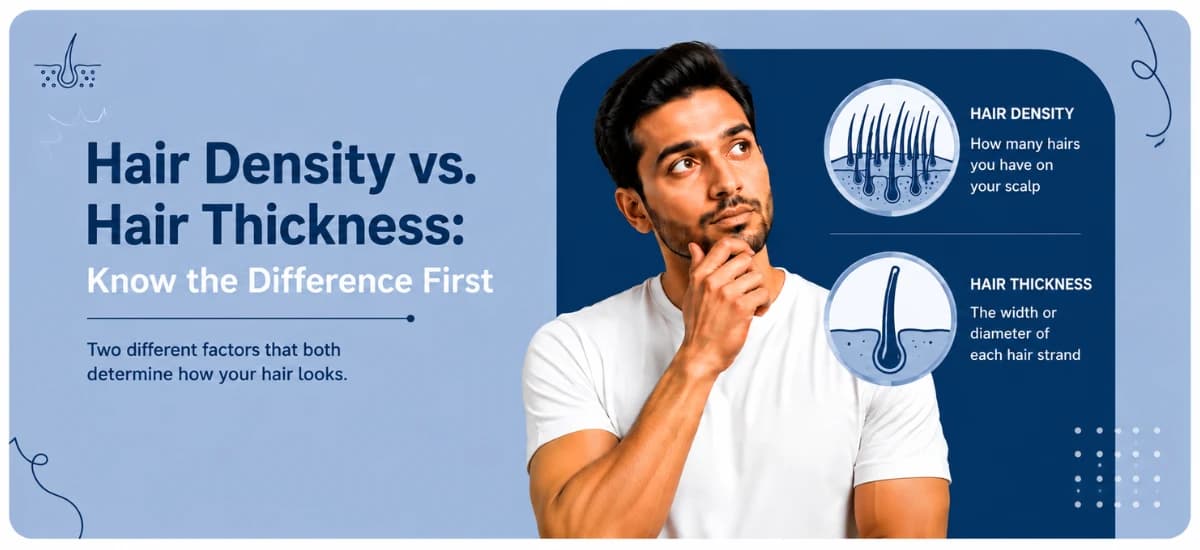
Hair Density vs. Hair Thickness: Know the Difference First
These two terms get used interchangeably, and that mix-up is why a lot of hair advice doesn’t work for the person following it.
| Hair Density | Hair Thickness | |
| What it measures | Number of strands per square centimetre of scalp | Width (diameter) of each individual strand |
| What affects it | Follicle count, DHT activity, scalp health, shedding | Mostly genetics, some diet influence |
| How to check | Ponytail test, strand count, mirror test under bright light | Compare a single strand to a sewing thread |
| Can it be improved? | Yes, if follicles are still active | Limited natural improvement, but styling and product choices can create the appearance of thicker hair |
A man can have fewer strands but each strand thick, and still look fuller than someone with more strands that are fine. Knowing which one you’re actually dealing with changes what you should do about it.
What counts as normal density?
A healthy scalp typically carries somewhere between 800 and 1,290 hair strands per square inch, according to clinical measurements. That number naturally varies by hair colour and texture, and it's not something you can eyeball accurately. This is exactly why guessing at a routine based on how your hair
What Causes Low Hair Density in Men
| Cause | How it works | Reversible? |
| DHT (dihydrotestosterone) | Binds to follicle receptors and shrinks them over time (miniaturisation) | Yes, if caught before follicles go fully dormant |
| Genetics | Determines how sensitive your follicles are to DHT | No, but treatable |
| Poor scalp blood flow | Reduces nutrient delivery to follicles | Yes, with massage and topical treatment |
| Nutritional gaps | Protein, iron, zinc, or biotin deficiency weakens the growth cycle | Yes, through diet or supplementation |
| Chronic stress | Pushes follicles into the shedding (telogen) phase early | Yes, once stress is managed |
| Heat and chemical damage | Breaks existing strands, doesn’t affect the follicle directly | Yes, hair regrows normally once damage stops |
DHT-driven miniaturisation is the one cause on this list that natural methods genuinely struggle with. Diet and scalp care support the process, but they don’t block DHT the way a targeted topical treatment can.
This is also where most men underestimate how far along they already are. Pattern hair loss doesn’t jump from “normal” to “bald” overnight. It moves through defined stages, and knowing which stage you’re at changes what actually helps. If you haven’t already, it’s worth reading through the stages of male pattern baldness to see where your hairline and crown currently sit on that scale before deciding on a routine. If your main issue is shedding rather than density loss, it’s also worth understanding the difference between hair fall and hair loss, since the two get treated very differently.
How to Increase Hair Density Naturally
1. Fix Your Protein and Micronutrient Intake
Hair is built almost entirely from a protein called keratin. When your diet runs short on protein, your body deprioritises hair growth in favour of more essential functions, which is one of the more common and overlooked causes of thinning.
| Nutrient | What it does for hair | Good sources |
| Protein | Builds the keratin structure of hair | Eggs, dal, paneer, soy, lentils, fish |
| Iron | Helps red blood cells carry oxygen to follicles | Red meat, spinach, lentils |
| Zinc | Supports the hair growth and repair cycle | Oysters, pumpkin seeds, chickpeas |
| Biotin | Aids keratin production | Eggs, nuts, seeds, sweet potatoes |
| Vitamin C | Boosts collagen production and helps iron absorption | Amla, citrus fruits, bell peppers |
| Vitamin E | Antioxidant that protects follicles from oxidative stress | Almonds, sunflower seeds, avocado |
| Omega-3 fatty acids | Reduces scalp inflammation, extends the active growth phase | Salmon, walnuts, flaxseeds |
Some of the research behind these nutrients is worth knowing. In one study, participants taking a vitamin E supplement for eight months saw 34.5% more hair growth compared to their starting point. Separately, a supplement combining omega-3 and omega-6 fatty acids with antioxidants was shown to reduce hair loss and increase density in women over a similar timeframe. These aren’t overnight fixes, but they show that nutrition genuinely moves the needle over months, not days.
Diet gaps aren’t just a Western-diet problem either. Indian dermatologists frequently link rising hair fall in young men to diets heavy in processed food and low in iron, zinc, and biotin, combined with the stress of urban life. One industry survey found that over 50% of Indian men experiencing hair loss are under the age of 25, a shift from what was considered normal even a decade ago. For a fuller breakdown of what’s driving this beyond diet, see our guide on the top causes of hair fall in men.
2. Massage Your Scalp Consistently
A 5 to 10 minute scalp massage most days improves blood flow to the follicles, and there’s real research behind this beyond folklore. A study on standardised scalp massage found it increased hair thickness by physically stretching the dermal papilla cells that sit beneath the scalp surface, essentially creating a mild mechanical stimulus for growth. It won’t reverse miniaturisation on its own, but it creates a better foundation for whatever treatment you’re using alongside it.
For context on how much a dedicated treatment can move density: one clinical study using low-level laser therapy on Indian patients with pattern hair loss recorded a 17.45% increase in terminal hair count and density after a defined treatment course, alongside a 13.91% increase in average hair thickness. Scalp massage alone won’t get you numbers like that, but it shows the range of what’s achievable with consistent, targeted treatment versus habits alone.
3. Reduce Breakage From Heat and Styling
Heat styling, harsh chemical treatments, and tight hairstyles don’t affect the follicle, but they snap existing strands, making thinning look worse than it actually is. Use a heat protectant if you must use heat tools, keep them on the coolest workable setting, and avoid daily use. Getting a small trim every few months also helps, since split ends travel up the shaft and shorten hair further if left alone.
4. Manage Stress and Sleep
Chronic stress can push hair follicles into a resting phase called telogen effluvium, causing increased shedding weeks or months after the stressful period. This is reversible once stress is managed, but it takes time since hair operates on a growth cycle measured in months, not days.
How to Thicken Hair Naturally
If your issue is fine strands rather than fewer strands, these habits help:
- Use a sulphate-free, volumising shampoo that doesn’t weigh hair down
- Air-dry over heat-drying when possible to prevent moisture loss that makes hair look limp
- Cold water rinses at the end of a wash flatten the hair cuticle, which makes strands look fuller
- Condition every wash, but apply lightly if your hair is already fine, since heavy conditioner can flatten volume
- Get regular trims to remove split ends that thin out the appearance of your length
Thick Hair Tips: Quick Checklist
- Eat a visible protein source at every meal
- Massage your scalp 5 to 10 minutes, most days
- Switch to a sulphate-free shampoo
- Use a heat protectant, and skip heat styling when you can
- Sleep 7+ hours consistently
- Trim every 8 to 12 weeks
- Get your hair fall pattern assessed if shedding feels above normal
Where Natural Methods Stop Working, and What Actually Helps
This is the part most generic hair blogs skip. If your thinning is driven by DHT and follicle miniaturisation, diet and massage support the process but will not bring density back on their own. Miniaturised follicles need active intervention. The right next step depends on how far along the thinning already is.
Early thinning (increased shedding, more scalp visible under bright light): This is where prevention has the highest payoff, and where you have the most to gain from acting now. Hisgro’s Hair Growth Capsules and Stage 1 Hair Support Gummies support the hair growth cycle from within, working alongside the nutrition and scalp care habits above rather than replacing them.
Active miniaturisation (visible density loss, widening partition): This is where topical treatment matters most. Hisgro Minoxidil 5% is formulated to improve blood flow to the follicle and extend the active growth phase. It’s one of the few ingredients with real clinical backing for actual regrowth, not just slowing further loss. In a comparative clinical study on Indian men using 5% minoxidil, up to 83% of patients showed a positive increase in hair growth on photographic assessment after consistent use. Pairing it with the Advanced Titanium Derma Roller improves absorption by creating micro-channels in the scalp, which is why dermatologists often recommend using the two together, similar to how microneedling is used alongside minoxidil in clinical settings. Hisgro’s Minoxidil + Derma Roller Combo bundles both for exactly this reason.
More advanced density loss: If your partition has widened significantly or the crown is visibly thinning, a single product usually isn’t enough. Hisgro’s staged kits, from the Stage 2 Regrowth Kit through the Stage 3 Kit with Derma Roller to the Stage 4 Regrowth Kit, combine the right mix of topical treatment, nutrition support, and scalp tools for where you actually are, rather than a one-size-fits-all bundle.
Filling nutritional gaps: Once you’re on an active routine, Hair Gummies help close common gaps in biotin, zinc, and other hair-supporting nutrients, especially useful if your diet isn’t fully dialled in yet.
A word on expectations: if follicles have been dormant for years, no product, natural or otherwise, can guarantee full density restoration. What consistent, correctly-matched treatment realistically does is slow further loss, thicken existing strands, and in many cases regrow hair in follicles that are miniaturised but not yet dead. The earlier you start, the more density is realistically recoverable. This isn’t a reason to wait and see: it’s the opposite.
Since treatment needs differ so much by stage, the most useful thing you can do before buying anything is figure out exactly where you stand. That’s what the free Hisgro Hair Test is built for: it identifies your current stage of hair loss and maps out a routine matched to it, instead of you guessing between six products on a shelf.
Find Out Where You Actually Stand
Guessing at a routine wastes months you don’t need to lose. The fastest way to know whether you need diet fixes, topical treatment, or both is to get your hair type and hair fall pattern assessed.
Take the free Hisgro Hair Test →
It takes two minutes and gives you a routine matched to your actual stage of hair thinning, not a generic list.
Free Hair Test | Check Your Hair Loss Stage
Follow 3 simple steps to understand your hair fall, discover your exact hair stage, and get a doctor-designed regrowth plan.
Take the FREE Hair Test
Answer a few questions and upload your hair photos.
Discover Your Hair Stage
Get your hair stage and personalized assessment report.
Follow Your Hair Plan
Get personalized recommendations for your hair needs.